
Oakland Theater Project’s Orpheus Descending by Tennessee Williams touches on our deepest human vulnerabilities. Through Will Detlefsen’s perceptive direction, we see a world unfold fractured by racism, prejudice, bigotry, and social confinement.
Sam Fehr’s focused set—a dry-goods store in a repressed Southern town—reflects the community’s narrow world, while drawing the audience into the emotional lives of its inhabitants. Alexis Brooks’s impressive sound design shifts fluidly between dark, atmospheric music and the evocative sounds of Val’s guitar. Coupled with Kimberly Scott’s expressive lighting, the production creates a mood that changes with each scene.
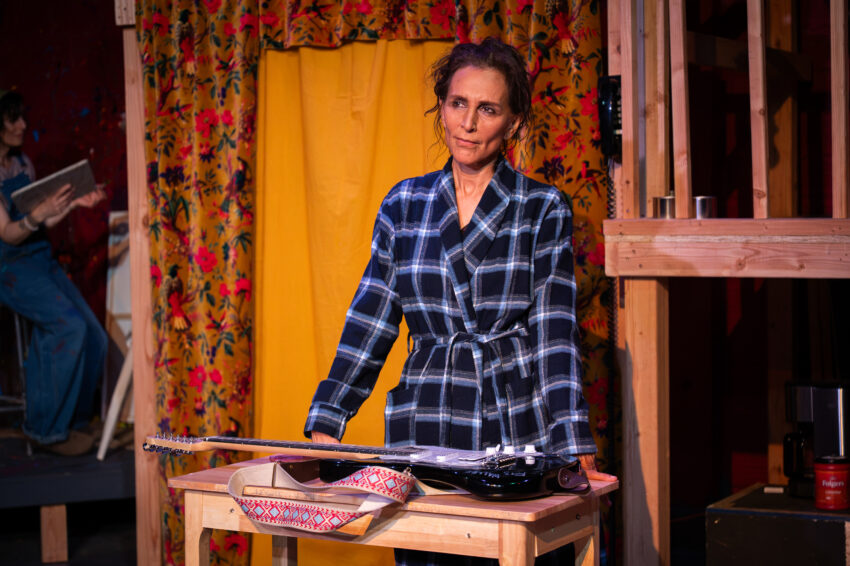
Strong-willed and passionate, Lady Torrance manages the store owned by her sickly, cancer-stricken husband, Jabe. She is consumed by hatred for the man who helped murder her father and burned down his property. Trapped in a loveless marriage, Lady has been hardened by grief, resentment, and loneliness. Lisa Ramirez gives an exceptional performance—fierce, emotionally layered, and vulnerable. She allows us to see the wounded woman beneath Lady’s hardened exterior.
Versatile Robert Parsons portrays three different male characters: Jabe Torrance, the cancer- stricken husband of Lady, the policeman, and Carol’s father, expertly changing nuances.
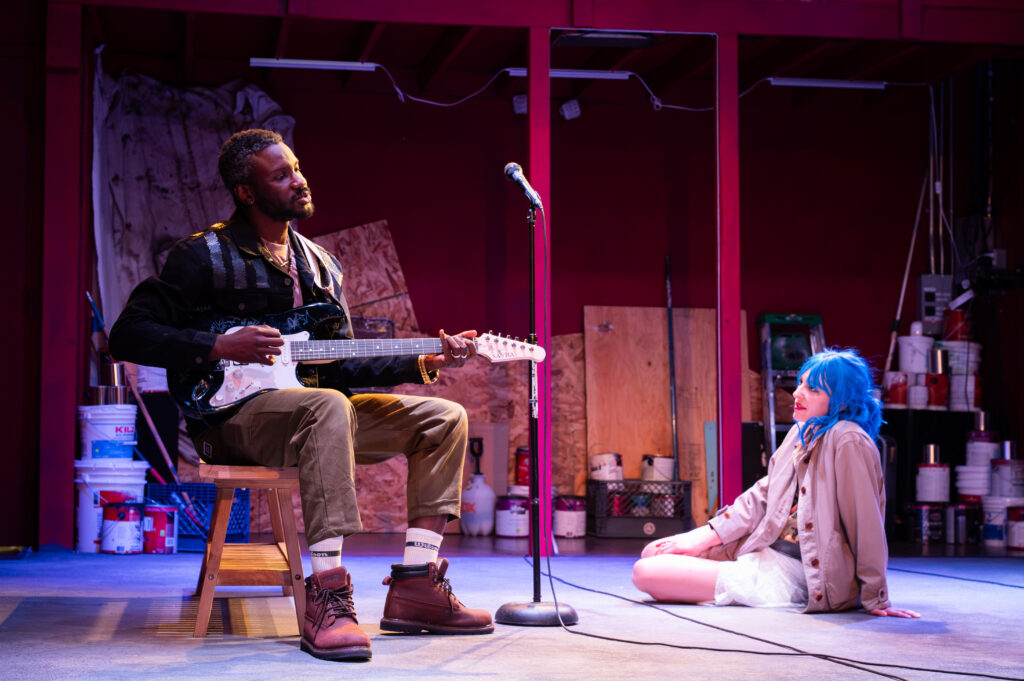
The suave Hunter Bryant plays the jobless Val Xavier. He ambles into town wearing a snakeskin jacket and carrying his guitar. Val possesses good looks, easy confidence, and a quick wit. Yet, beneath his charm lies a restless fear of being trapped.
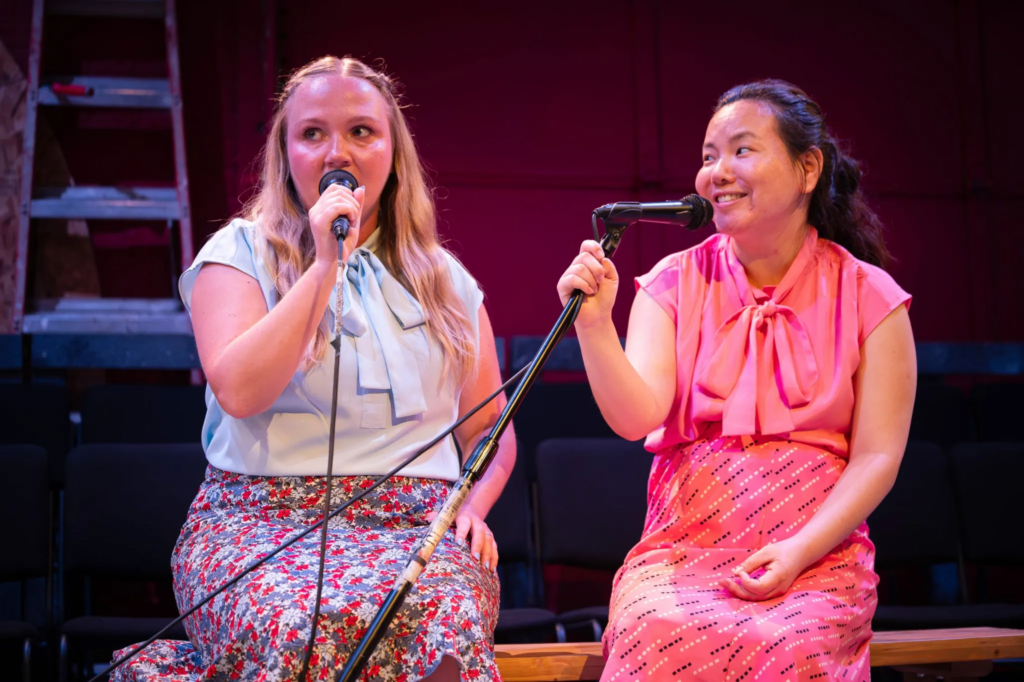
The outspoken Beulah, L. Zúñiga and tag-along Dolly, Zolboo Namkhaidorj, serve as voices of the community. Like a Greek chorus—or gossips found in small towns—they keep the audience aware of the townspeople’s reactions. They spy on Val’s every move. Speaking back and forth through microphones, both actors bring welcome comic relief to the production.
Wild and free, Carol Cutrere revels in being herself, embodying the authenticity the town condemns. Quick-paced in both manner and speech, Natalie Pasquinelli excels in the role.
Vee, an artist married to an insensitive sheriff, represents hope for the future. Her abstract paintings express a spirituality that reaches beyond any rigid boundary. Susannah Martin portrays her whimsical artist, yet visionary nature, with aplomb.
Williams centers on Val and Lady who share a profound loneliness rooted in fear. Lady fears remaining imprisoned in her marriage and in the community that destroyed her family. Val restores Lady’s passion and hope, while she offers him the possibility of belonging. Not very different than in today’s world.
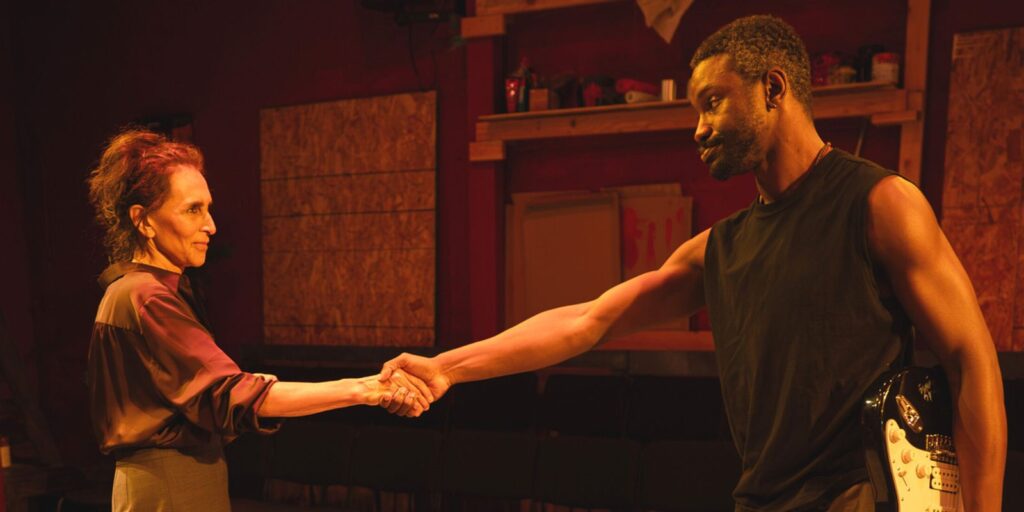
Williams captures their isolation in one of the play’s most lyrical and painful lines: “We’re all of us sentenced to solitary confinement inside our own skins, for life!” Yet the town’s bigotry grows more threatening. Val prepares to flee, while Lady clings to him as her last hope for love and freedom.
Val speaks of tiny birds without legs that live their entire lives on the wind, touching the earth only when they die. Together, these images—the solitary confinement of the human body and the footless birds—lyrically express our longing to escape fear, loneliness, and oppression.
Williams’s world is not so different from our own, where political extremism can leave people vulnerable to capture and immediate incarceration.
Through the extremely talented cast and direction of Orpheus Descending, Oakland Theater Project reminds all of us of the emotional power of theatre.
See it.
“Orpheus Descending” by Tennessee Williams, director, Will Detlefsen, Set Designer, Sam Fehr, Costume Designer, Alexia Dominique Rodriguez, Lighting Designer, Kimberly Scott, and Sound Designer, Alexis Brooks & Brooklyn Sound Lab, at Oakland Theater Project, Oakland, California. info: oaklandtheaterproject.org – to August 23, 2026.
Cast: Hunter Bryant, Lizzie Izyumin, Susannah Martin, Zolboo Namkhaidorj, Robert Parsons, Natalie Pasquinelli, and Lisa Ramirez.
Photos by Ben Krantz Studio